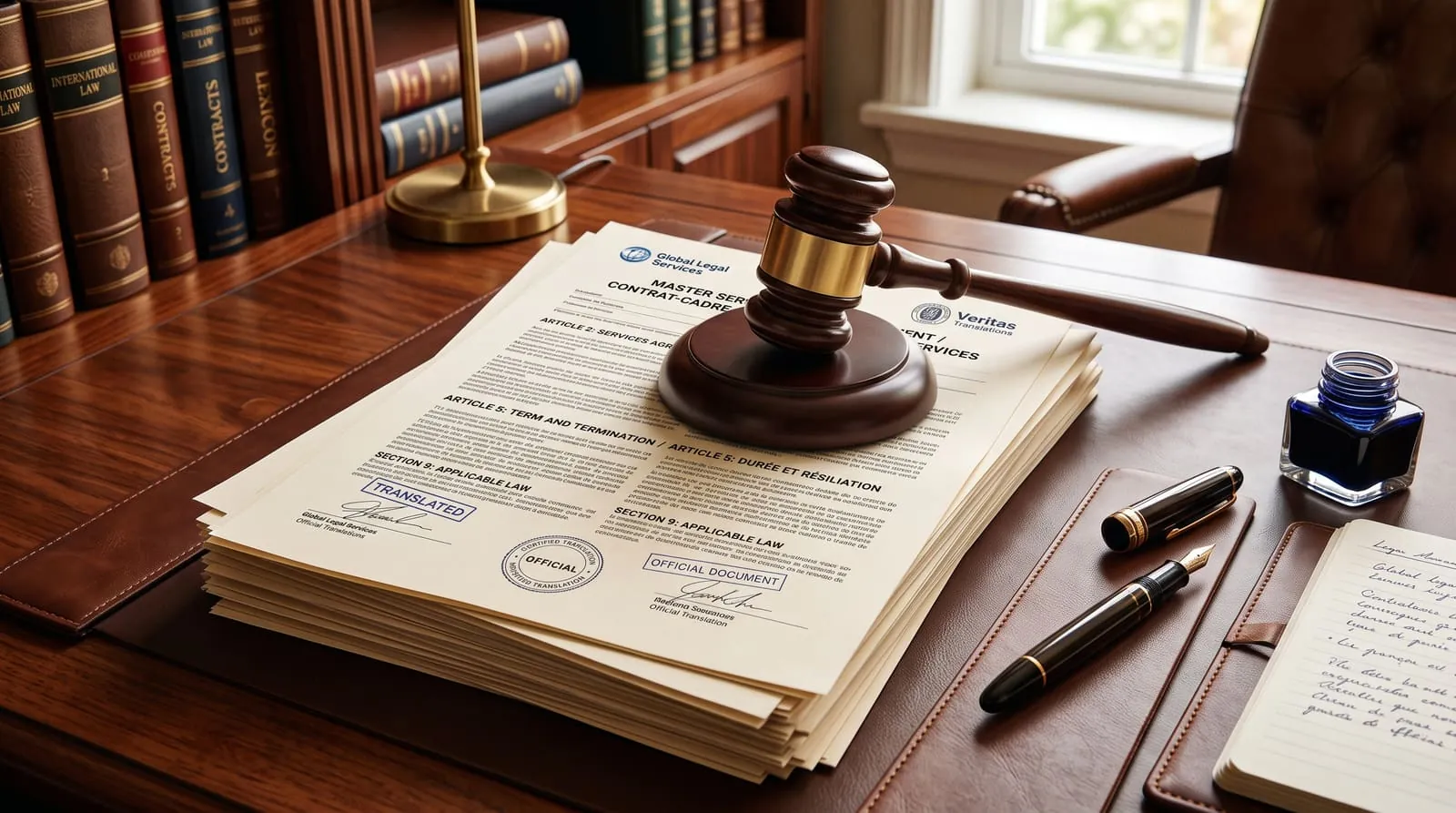

Certified & Notarized Translation for Immigration: A Compliance Guide
A practical guide to certified translation and notarized translation for immigration and study abroad, covering notary public procedures, stamping rules, ISO 17100, and rejection risks.

Introduction: Why Do Consulates Reject Translated Documents?
In immigration, study abroad, international marriage, or overseas asset planning, applicants often face rejection because translated documents fail to meet certified translation or notarized translation standards. Notary publics in China conduct strict formal reviews of stamps, translator qualifications, and formatting, while destination-country agencies (USCIS, IRCC, UKVI) apply their own evidence rules. This mismatch is a core pain point causing requests for evidence, delays, or denials.
This article provides an actionable framework covering notary public workflows, certified translation standards, and stamping compliance.
1. Certified Translation vs. Notarized Translation
1.1 Certified Translation
A certified translation is issued by a qualified translation agency or translator, accompanied by a Translator's Certification stating the translation is accurate and complete and the translator is competent. Common in the U.S., Canada, and Australia, it does not require a notary public.
1.2 Notarized Translation
A notarized translation is certified by a notary public that the translation conforms to the original, bearing the notary's official seal and signature. Chinese notary publics typically require translation by a qualified agency before notarizing conformity.
1.3 Key Differences
| Dimension | Certified Translation | Notarized Translation |
|---|---|---|
| Issuing body | Translation agency/translator | Notary public |
| Core credential | Translator's Certification + agency stamp | Notary seal + notary signature |
| Use cases | U.S./Canada/Australia immigration, some study applications | China-based foreign-related notarization, some European countries |
| Original required | Usually copies accepted | Original must be verified |
| Legal effect | Translator testimony under evidence law | Public document effect |
2. Compliance Essentials for Notary Public Translation Stamping
2.1 Common Requirements
- Translation agency must have "translation services" in its business scope;
- Translation must correspond page by page, without merging or omission;
- Stamp must be the agency's official or translation-specific seal; cross-page seal for multi-page documents;
- Translator's Certification must include name, qualifications, date, and signature.
2.2 Pre-Submission Checklist
- Agency stamp is clear and not blurred;
- Cross-page seal applied to multi-page documents;
- Translator's Certification bound with the translation;
- Notarial wording matches the translation language;
- Apostille or consular legalization completed if required;
- Translation date precedes submission date.
3. ISO 17100 Process Constraints
ISO 17100:2015 requires translation services to include translation, revision, and review, with project records retained. Choosing an ISO 17100-certified agency ensures:
- Translators hold relevant language-pair qualifications;
- Translation is reviewed by a second person;
- Terminology consistency is controlled;
- Traceable quality records for consulate verification.
Key Terminology Cross-Reference
| English | Chinese | Definition |
|---|---|---|
| Certified Translation | 认证翻译 | Translation with translator's certification of accuracy and completeness |
| Notarized Translation | 公证书翻译 | Translation certified by a notary public to conform to the original |
| Translator's Certification | 译者声明 | Signed statement of accuracy by the translator |
| Notary Public | 公证处/公证员 | Institution or officer legally authorized to notarize |
| Apostille | 海牙认证 | Simplified certification among Hague Convention members |
| Consular Legalization | 领事认证 | Final certification by diplomatic or consular authorities |
| ISO 17100 | 翻译服务国际标准 | International standard for translation processes and quality |
FAQ
Q1: Must a notary public's translation be done internally?
Not necessarily. Most notary publics allow applicants to commission a qualified translation agency, then verify and notarize. Some designate partner agencies; confirm in advance.
Q2: Does a certified translation need notarization?
Depends on the destination country. USCIS generally accepts certified translation without notarization; some European countries require notarization or Apostille. Follow official guidance.
Q3: Can a stamped translation be modified?
No. The stamp means the agency is responsible for the translation. Any change requires re-issuance and re-stamping. Verify names, dates, and ID numbers before submission.
Conclusion and Action Steps
Compliance in certified and notarized translation directly affects immigration and study abroad outcomes. Confirm destination-country requirements early, choose an ISO 17100-certified agency, and strictly follow stamping and checklist procedures. To evaluate your document translation plan, contact the Linguist team for a professional quote and compliance advice.
Expanding globally or tackling translation compliance?
ISO 17100 certified. Get instant localization readiness diagnostic & quotation.
Share this article