Medical Training Material Translation: A Practical Guide from Compliance Pitfalls to Engineered Delivery
Medical training material translation is more than language conversion. Drawing on ISO 17100, EU MDR, and FDA 510(k) requirements, this article breaks down terminology consistency, version control, and LMS integration challenges in课件,教材, and employee training translations, offering an actionable delivery framework.
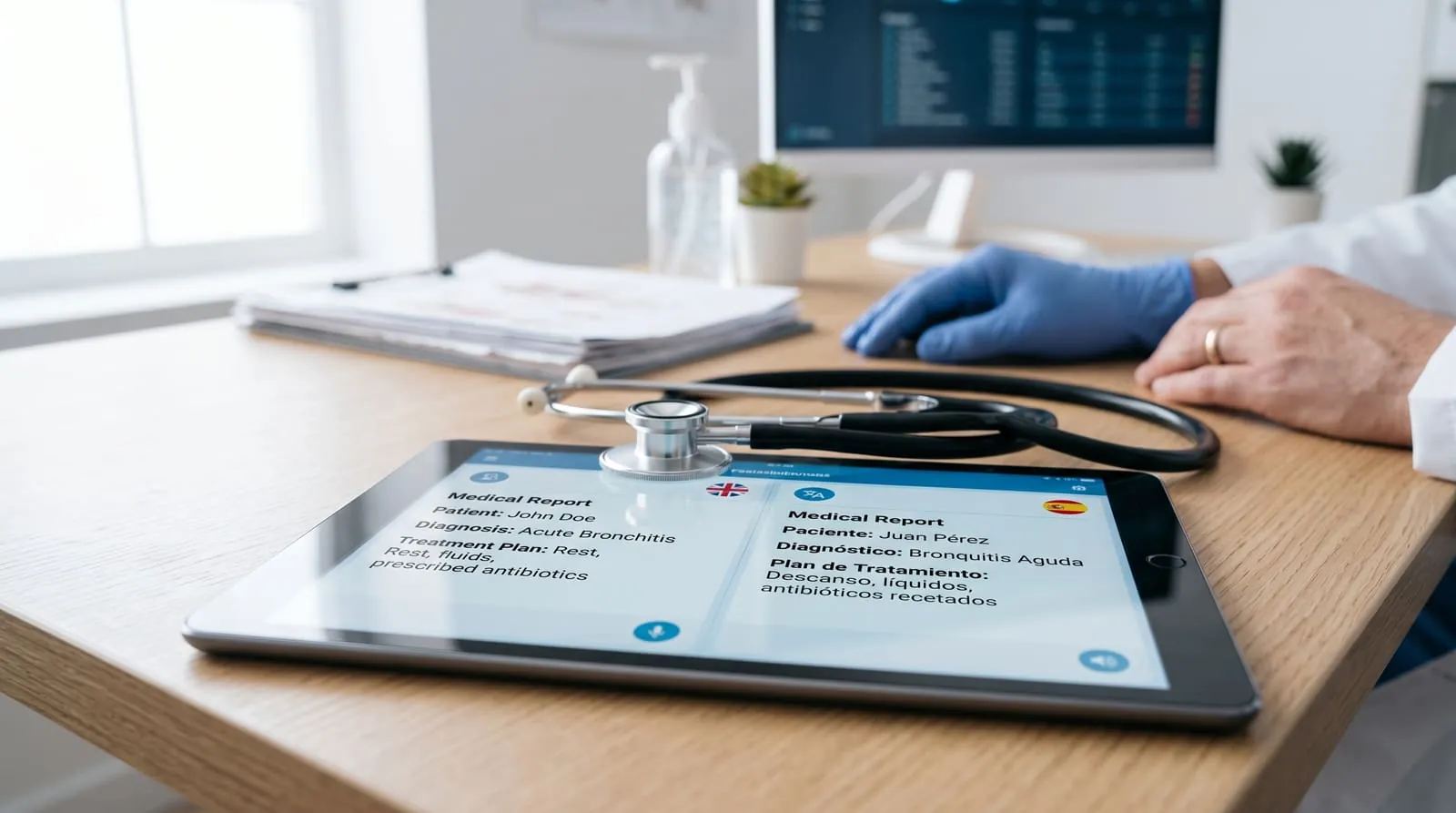
Medical Training Material Translation: Don't Let Language Be the Hidden Reef of Compliance
Last year, an orthopedic device manufacturer's misstep became a cautionary tale: they translated a surgical procedure training deck for EU distributors but overlooked MDR 2017/745's strict language requirements for IFUs. The distributor used an unofficial translation in training, and a notified body issued a non-conformity. The product sat in customs for three weeks. Direct losses exceeded six figures in euros.
This isn't an isolated case. Medical training material translation—whether for new-hire GMP training, clinical trial protocol training, or device operation courses—faces a harsh reality: language errors can directly trigger regulatory risk.
Three Compliance Minefields in Medical Training Materials
1. Terminology Inconsistency Leading to Clinical Misunderstanding
In a cardiovascular intervention training manual, "guidewire" was translated three different ways across chapters. Trainees selected the wrong device specification during simulation. Terminology management isn't a nice-to-have; it's a safety baseline. We typically require clients to provide a corporate termbase and lock down translations for core device names, anatomical sites, and procedural verbs before translation begins.
2. Version Control Failure
Medical training materials have short lifecycles. Product iterations, regulatory updates, and clinical feedback all trigger revisions. If the translated version diverges from the source version, training content may reference obsolete procedures. ISO 17100:2015 requires translation service providers to maintain complete revision records, but many internal processes don't integrate translation versions into change control. Our approach: each delivered file includes a version cross-reference table with source version number, translation date, and revision summary, integrated with client document management systems (e.g., SharePoint or Veeva Vault).
3. LMS Compatibility
After translation, employee training materials must be imported into an LMS (e.g., Moodle, Cornerstone) for distribution and assessment. But translated SCORM packages often suffer from metadata corruption, character encoding errors, and scrambled quiz options. The root cause: XML structure not preserved during translation. We unpack SCORM packages before translation to ensure xAPI statements and CMI data model fields remain intact.
Engineered Delivery Process: Five Control Points from Source File to LMS
Based on ISO 17100 and ISO 27001 requirements, we've designed these control points for medical training material translation:
| Control Point | Key Actions | Output |
|---|---|---|
| Source file analysis | Identify file formats (PPT/SCORM/PDF/Articulate Storyline), translatable text ratio, embedded image text | Source analysis report |
| Terminology management | Extract term candidates, confirm with client SMEs, import into CAT tools | Project termbase (TB) |
| Translation & review | Dual blind translation + reconciliation, or translation + technical review + linguistic review (per ISO 17100) | Bilingual对照 file |
| Desktop publishing (DTP) | Preserve original formatting, handle text expansion (Chinese→English typically +30%), adjust tables and text boxes | Typeset target-language files |
| Functional testing | Import into LMS for testing, verify navigation, quizzes, bookmarks | Test report |
Note: Medical training decks often contain numerous screenshots and annotations. Image text must be handled in sync. We use OCR-assisted extraction, but human proofreading is essential to avoid misreading "5mm" as "Smm".
Special Considerations for Textbook Translation: Beyond Language Conversion
Medical textbook translation (e.g., anatomy atlases, clinical procedure manuals) is challenging due to high knowledge density, numerous figures, and frequent cross-references. A common pitfall is index and glossary translation getting out of sync. For example, "myocardial infarction" is translated as "心肌梗死" in the body text but left as "心肌梗塞" in the index—readers searching will be confused. Our approach: create separate fields for index entries in the translation memory to enforce consistency with body text terminology.
Additionally, measurement units, drug dosages, and lab reference values in textbooks must conform to target market standards. For instance, "mg/dL" in US textbooks must be converted to "mmol/L" with conversion factors noted, or clinical misreading may occur.
Agile Strategies for Employee Training Material Translation
For rapidly iterating job-specific training (e.g., SOP updates, equipment operation video subtitles), we recommend a hybrid model of translation memory + machine translation post-editing (MTPE). But in medical contexts, caution is required: MTPE is only suitable for low-risk content (internal notices, administrative processes). Content involving clinical procedures or patient safety must be fully human-translated and reviewed.
A practical tiering strategy:
- Tier A (patient safety critical): Full human translation + dual review + clinical expert verification
- Tier B (operational procedures): Human translation + technical review
- Tier C (general administrative): MTPE + linguistic review
Frequently Asked Questions (FAQ)
Q1: What qualifications are needed for medical training courseware translation?
A: Translation service providers should hold ISO 17100 certification, and translators need medical or life science backgrounds. For the EU market, training materials involving device use must comply with MDR 2017/745 Annex I, Section 23 language requirements, typically requiring native translators of the target market's official language.
Q2: How can I ensure translated SCORM packages run properly in an LMS?
A: Unpack the source SCORM package before translation, preserve the imsmanifest.xml structure, and replace only text nodes in
Q3: What is the typical turnaround for training material translation?
A: For a 50-page PPT deck, from terminology confirmation to delivery takes about 5-7 business days. If SCORM packaging and LMS testing are included, add 2-3 business days. Urgent projects can be compressed to 3 days, but additional review resources are required.
Final Thoughts
Success in medical training material translation often hinges on details: one term, one version number, one XML tag. Choosing a partner with ISO 17100 processes and medical domain experience helps you avoid those invisible reefs. If you're planning multilingual versions of your training materials, contact the Linguist team for a tailored solution.
Expanding globally or tackling translation compliance?
ISO 17100 certified. Get instant localization readiness diagnostic & quotation.
Share this article