
Technical Documentation Translation: Regulatory Compliance and Engineering Practices for Medical Devices
Medical device technical documentation translation is not just language conversion—it directly impacts 510(k) and EU MDR submissions. This article breaks down engineering approaches for terminology management, format fidelity, and version control to avoid compliance pitfalls.
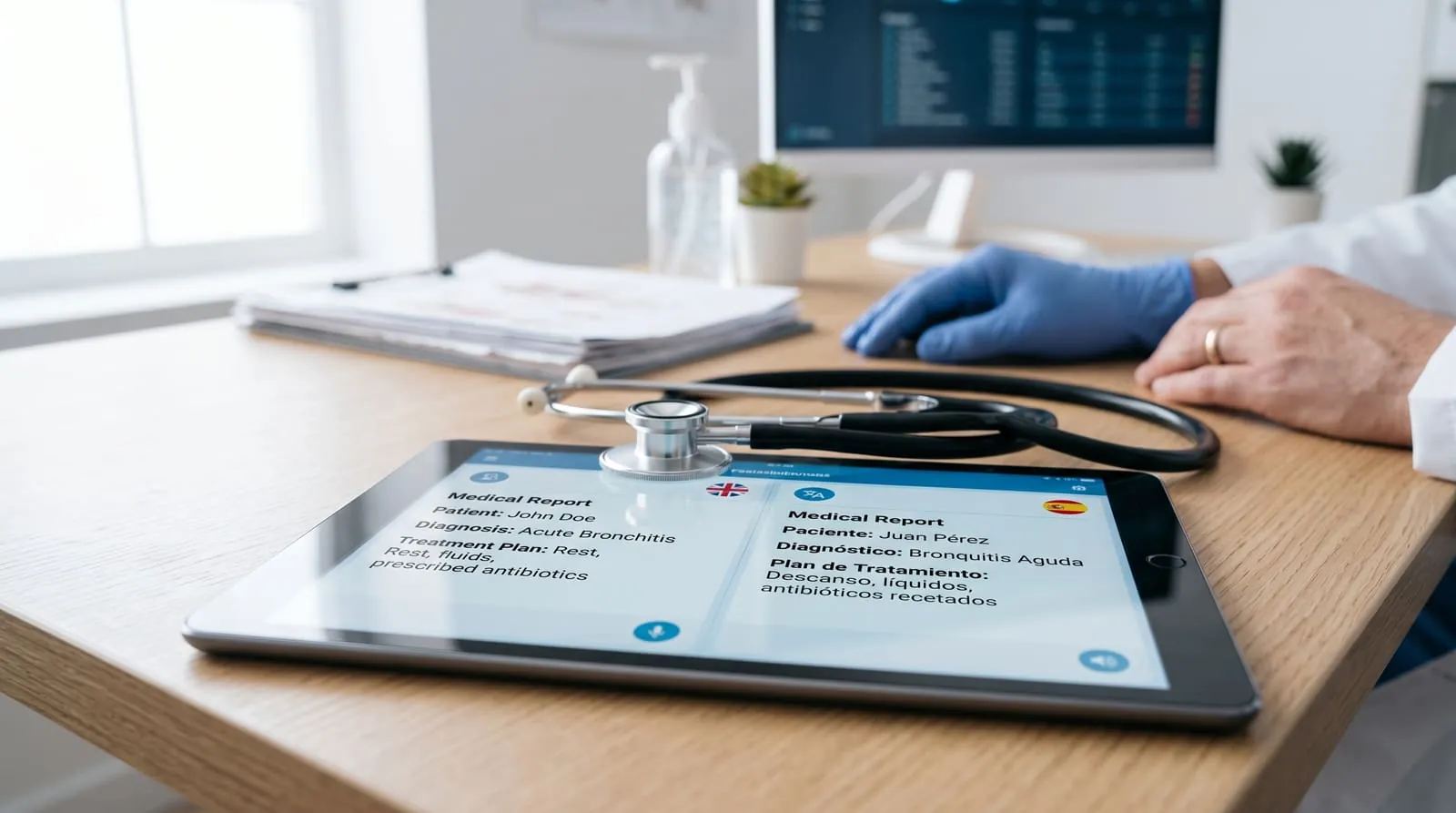
Technical Documentation Translation: From Language Conversion to Regulatory Clearance
When a medical device manufacturer submits technical files to the FDA or a notified body, a single ambiguous translation can trigger deficiency letters or delay approval by months. This isn't a language problem. It's a compliance risk.
Take EU MDR 2017/745. Notified bodies review the completeness and consistency of technical documentation. If the hazard description in the risk management report uses different terminology than the clinical evaluation report, the reviewer will question whether the documentation is under control.
The core of technical documentation translation is not "beautiful language." It's "zero errors."
Regulatory Hard Requirements for Technical File Translation
EU MDR Annex II requires technical documentation to include labels and IFUs in all applicable languages. While FDA 510(k) submissions are in English, multi-center clinical trials require translating source subject materials and obtaining ethics committee approval.
MDR Article 10(11) explicitly requires manufacturers to establish a change control procedure for technical documentation. Translated versions are controlled documents. Any source update must trigger synchronized translation updates.
Common misconception: Treating technical manual translation as a one-time project. In reality, from design freeze to post-market surveillance, technical documentation evolves continuously. Translation must be embedded in change management.
Typical Compliance Pitfalls in Technical Documentation Translation
During a review of an orthopedic implant manufacturer's hip system technical file, we identified three high-frequency issues:
- Terminology inconsistency: The same component was called "acetabular cup" in risk management documents and "acetabular component" in the surgical technique manual. Notified bodies require a unified terminology database.
- Format misalignment: After translation, tables broke across pages, causing critical parameters to misalign with corresponding components.
- Version confusion: Source file Rev.C was updated, but translation was still based on Rev.B, with no version mapping indicated.
The root cause: technical file translation lacks an engineering workflow.
Five Key Control Points for Engineering Documentation Translation
1. Terminology Database and Controlled Vocabulary First
Before translation begins, extract terms from source files, build an English-Chinese glossary, and determine the unique translation for each term. For medical devices, terminology sources include:
- IMDRF terminology sets
- Product-specific terms (e.g., "drug-eluting stent" cannot be simplified to "stent")
- Official regulatory translations (e.g., "adverse event" not "side effect")
The terminology database must be confirmed by clinical, regulatory, and marketing teams, then locked.
2. Format Fidelity and Structured Processing
Technical manual translation often involves InDesign, FrameMaker, or XML/DITA source files. Translating PDFs directly causes layout disasters. The correct approach:
- If source is structured content, use DITA or S1000D for content mapping
- If source is a layout file, extract text, translate, then reinsert while preserving styles
- After translation, perform format validation to ensure tables, figure captions, and cross-references are intact
3. Version Control and Change Traceability
Every translated file must carry:
- Source file version number
- Translation version number
- Change description
- Effective date
Integrating a translation management system (TMS) with PLM systems is recommended to automatically trigger translation tasks when source files update.
4. Quality Assurance for Regulatory Language
QA for technical file translation differs from general translation. Beyond linguistic accuracy, check:
- Regulatory citations are correct (e.g., "Regulation (EU) 2017/745" cannot be abbreviated to "MDR")
- Numbers, units, and symbols match the source
- Warning statements retain original strength (e.g., "WARNING" cannot be softened to "Note")
5. Multilingual Synchronization and Publishing
If a product launches in the EU, US, and Japan simultaneously, technical file translations must be managed in parallel. Establish a master source file (usually English), and translate other languages from the master to avoid double-translation errors.
Vendor Selection Checklist for Technical Documentation Translation
Not all translation companies can handle medical device technical documentation. When screening, require:
- ISO 17100 certification (translation service quality management)
- ISO 13485 or ISO 9001 system (medical industry experience)
- Terminology management process description
- Confidentiality agreement and data security measures
- At least two translation case studies for similar products
Practical Advice for Technical Manual Translation
For surgical technique manuals, translation teams need to understand surgical workflows. We once encountered "proximal" in an orthopedic context that should be translated as "近端" (proximal end), but the translator misused the adjective form. Such errors can mislead clinical training.
Build a terminology list for each product line and have translators read the product instructions and clinical evaluation reports to establish contextual understanding.
Frequently Asked Questions
Q: How much does technical documentation translation cost?
A: Cost depends on word count, language pairs, format complexity, and regulatory requirements. Medical device technical documentation is typically priced per thousand words, but terminology management, formatting, and QA add cost. Request an itemized quote from vendors.
Q: Can machine translation be used for technical files?
A: It can be used for internal reference, but not for regulatory submissions. MT cannot ensure terminology consistency or regulatory language accuracy. If used, it must undergo professional post-editing and regulatory review.
Q: How can I ensure translated versions stay synchronized with source files?
A: Establish a change control process. Any source update must notify the translation team and trigger an assessment for translation updates. TMS-PLM integration can automate this.
Q: Which languages are required for technical file translation?
A: EU MDR requires official languages of all member states, typically including English, German, French, Italian, Spanish, etc. Specific requirements depend on launch countries.
Q: What qualifications should a translation company have?
A: Prefer translation service providers with ISO 17100 certification and medical device industry experience. For clinical trials, ISO 27001 information security compliance is also required.
Need to evaluate your technical documentation translation project? Contact Linguist for compliance advice and a quote.
Expanding globally or tackling translation compliance?
ISO 17100 certified. Get instant localization readiness diagnostic & quotation.
Share this article