
How Interpreters Prepare for Conferences: Glossary, Briefing & On-Site Workflow
80% of interpreting success is determined before the meeting starts. This guide breaks down how interpreters prepare for conferences—glossary building, client briefing, and on-site workflow—with actionable checklists and a bilingual terminology table.
Why How Interpreters Prepare for Conferences Determines Simultaneous Success
In highly regulated sectors such as medical devices, automotive engineering, and patent litigation, interpreting quality directly affects compliance risk and business decisions. Industry consensus holds that 80% of interpreting performance is determined by pre-conference preparation. Yet interpreters routinely face late materials, missing terminology, unfamiliar accents, and last-minute workflow changes. This article addresses the core question—how interpreters prepare for conferences—across three dimensions: glossary, briefing, and on-site workflow.
Pain Point 1: Missing Glossary Leads to Mistranslation
In an EU MDR 2017/745 compliance meeting, mistranslating "conformity assessment" can cause regulatory misunderstanding. A glossary is the first line of defense.
Pain Point 2: Briefing Becomes a Formality
Many organizers provide only an agenda. Interpreters must proactively request speaker backgrounds, PPTs, past recordings, and abbreviation lists.
Pain Point 3: On-Site Workflow Is Unpredictable
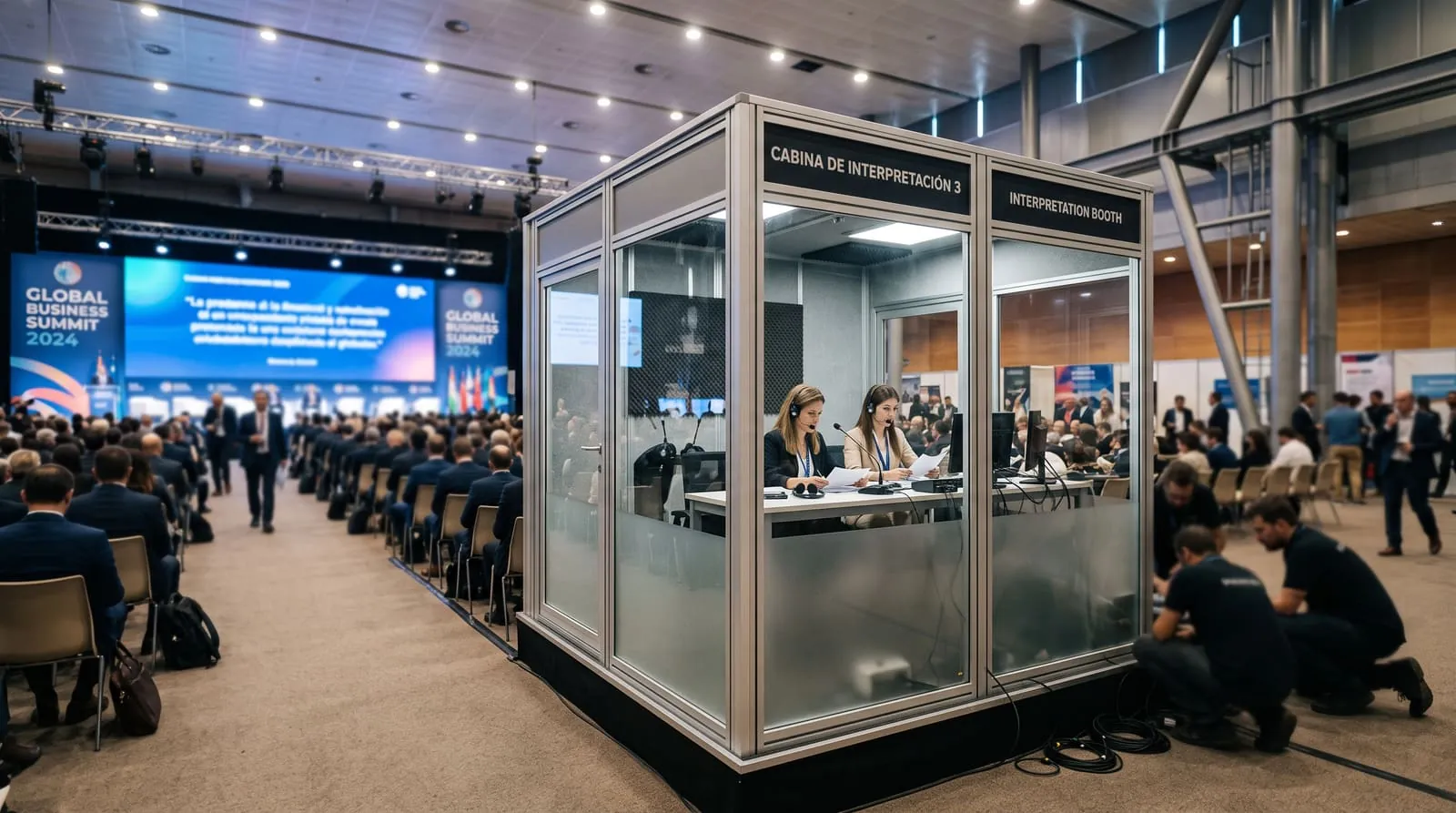
Booth equipment, relay interpreting, and Q&A microphone switching all require advance reconnaissance.
1. Glossary Building: From Zero to Deliverable
1.1 Terminology Sources
| Source | Purpose | Priority |
|---|---|---|
| Client bilingual documents | Extract official translations | High |
| Industry standards (ISO, IEC, FDA guidance) | Verify authority | High |
| Past conference recordings | Restore real context | Medium |
| Speaker PPTs and papers | Predict high-frequency terms | Medium |
| Corporate termbase | Unify brand language | High |
1.2 Glossary Field Design
Use Excel or TBX format with fields: source term, target term, definition, context example, abbreviation, forbidden translation, source.
1.3 Glossary Validation
Confirm disputed terms with the client or SME 48 hours before the event. For example, in ISO 26262 functional safety meetings, "ASIL" should remain as an abbreviation rather than being fully translated, to preserve simultaneous fluency.
2. Briefing: Aligning Interpreter and Client
2.1 Briefing Checklist
- Meeting topic, objectives, participant backgrounds
- Speaker list, accents, speed, PPTs
- Domain and regulatory framework (e.g., IATF 16949, PCT)
- Final glossary confirmation
- Simultaneous/consecutive mode, relay languages
- Q&A rules
- NDA and data security requirements (ISO 27001)
2.2 Suggested Briefing Agenda
Schedule a 30–45 minute online briefing. Interpreters ask questions; clients clarify. Focus on abbreviations, product names, titles, and units.
3. On-Site Workflow: From Recon to Wrap-Up
3.1 Pre-Event Recon
- Booth position, sightlines, ventilation
- Microphones, headsets, channel assignment
- Backup equipment and contingency plans
- Signal routing with AV team
3.2 On-Site Collaboration
Simultaneous interpreters should agree on rotation rhythm (typically 20–30 minutes), hand signals, and real-time terminology sync. Consecutive interpreters must confirm note-taking symbols and speaker pause habits.
3.3 Post-Event Debrief
Collect new terms, update the glossary, and record speaker accent features to build a reusable conference knowledge base.
Key Terminology Cross-Reference
| English | Chinese | Definition |
|---|---|---|
| Glossary | 术语表 | Bilingual term list with definitions and context |
| Briefing | 译前简报 | Client communication on background, speakers, and terminology |
| Simultaneous Interpreting | 同声传译 | Interpreting while the speaker talks, usually in a booth |
| Consecutive Interpreting | 交替传译 | Interpreting after speaker pauses, often with note-taking |
| Relay Interpreting | 接力传译 | Interpreting via an intermediate language, e.g., ZH→EN→FR |
| SME (Subject Matter Expert) | 主题专家 | Domain expert validating terminology and content |
| TBX | 术语交换格式 | XML standard for termbase exchange |
| ASIL | 汽车安全完整性等级 | ISO 26262 functional safety level, usually kept as abbreviation |
| Conformity Assessment | 符合性评估 | Compliance procedure under EU MDR 2017/745 |
| eCTD | 电子通用技术文档 | Electronic Common Technical Document for drug submissions |
Frequently Asked Questions (FAQ)
Q1: The client won't share confidential materials in advance. How can interpreters prepare?
A: Sign an NDA and use redacted materials, or arrange for on-site closed reading. If still unavailable, build a general glossary from public regulatory documents (e.g., FDA guidance, ISO standards) and confirm key abbreviations during briefing.
Q2: How do you unify glossaries across multiple relay languages?
A: Establish a Master Glossary updated by all language teams. Exchange in TBX format and appoint a Terminology Coordinator to freeze the version 24 hours before the event.
Q3: What if a speaker changes or deviates from the PPT on site?
A: Prepare an "elastic terminology pack" covering hypernyms and hyponyms of the topic. Maintain signal communication with your partner and, if necessary, confirm key figures and proper nouns with the speaker during Q&A.
Strategic Takeaways
How interpreters prepare for conferences is fundamentally a system integrating terminology management, briefing alignment, and on-site workflow control. Interpreters and organizers should embed preparation into project management and verify each item with checklists. For highly regulated meetings, glossary authority directly affects compliance risk.
To configure a professional interpreting team or terminology support for your next international conference, contact WorldLingo for a customized quote and plan.
Expanding globally or tackling translation compliance?
ISO 17100 certified. Get instant localization readiness diagnostic & quotation.
Share this article