Game and Multimedia Localization: Subtitling, Dubbing Scripts, and LQA Workflows
A practical guide to game and multimedia localization covering subtitle specs, dubbing script adaptation, and linguistic quality assurance (LQA) to reduce rework and meet platform compliance.
Why Game and Multimedia Localization Is Harder Than Software Localization
Game and multimedia localization is not text replacement. It is constrained by character budgets, timecodes, lip sync, cultural compliance, and platform publishing standards. A pun that works in English may expand 30% in German and break the UI; an 8-second line may take 11 seconds in Japanese dubbing and disrupt a cutscene.
Worse, subtitles, dubbing scripts, and LQA are separate deliverables that share the same source assets. Without a unified termbase, translation memory (TM), and style guide, rework compounds across build iterations.
Core Deliverables: Subtitles, Dubbing Scripts, and LQA
Subtitles: Readability Over Literal Correspondence
Game subtitles must follow platform and broadcast standards such as the Netflix Timed Text Style Guide or BBC Subtitle Guidelines. Key constraints include:
- CPS (Characters Per Second): typically ≤17 for adult content, ≤13 for children.
- CPL (Characters Per Line): usually ≤42 characters, max two lines.
- Minimum duration: generally ≥1 second to avoid flicker.
- SDH (Subtitles for the Deaf and Hard of hearing): requires sound effect and speaker labels.
Common formats include SRT, VTT, TTML/DFXP, and iTT. In engineering pipelines, use tooling that validates timecodes to avoid frame-rate drift (e.g., 23.976 fps vs. 25 fps conversion).
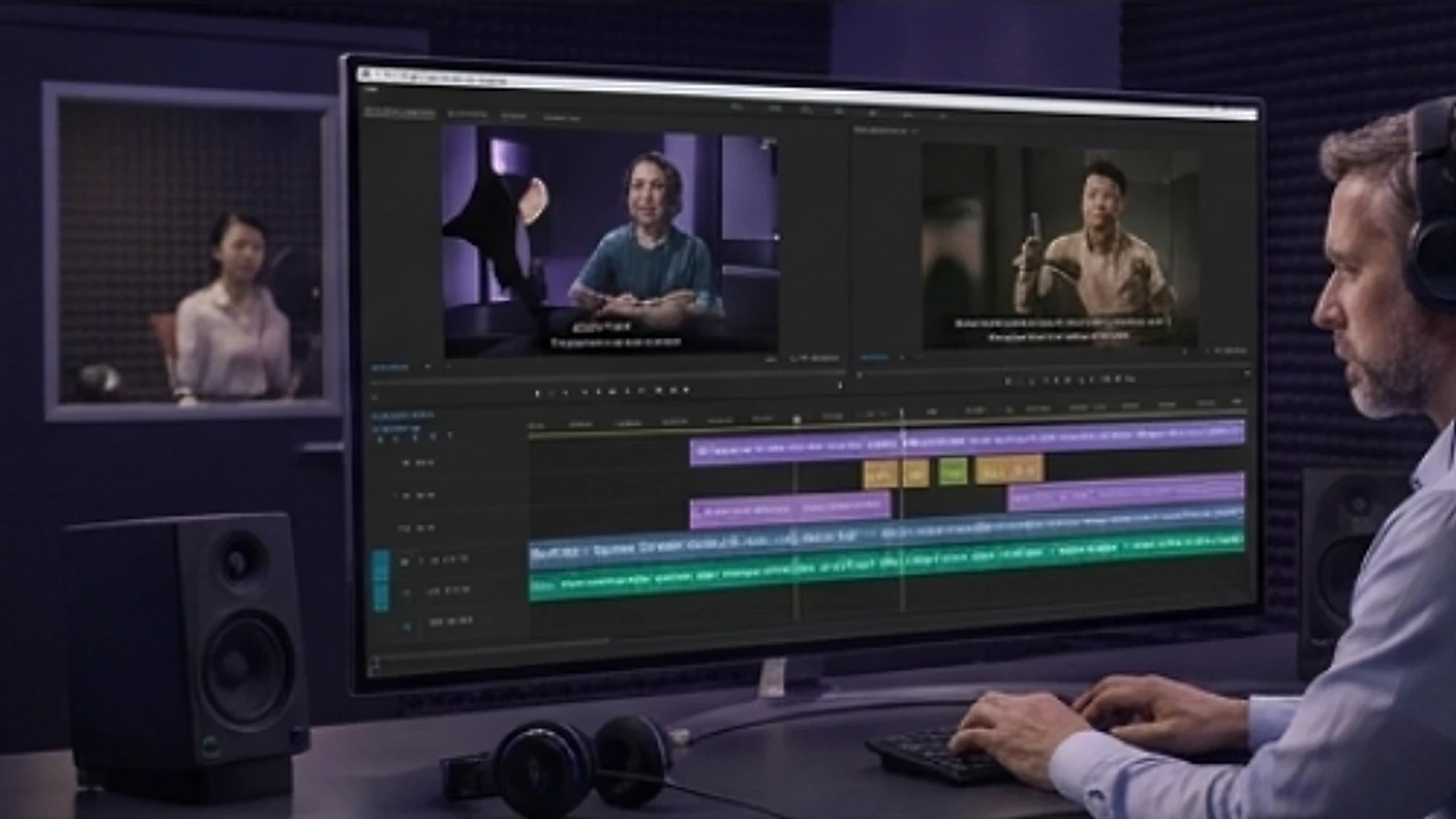
Dubbing Scripts: Written for Speaking, Not Reading
The core of a dubbing script is sync, which falls into three categories:
| Sync Type | Description | Use Case |
|---|---|---|
| Lip Sync | Dialogue matches character mouth movements | Close-ups, animated leads |
| Isochrony | Translated duration matches source | Cutscenes, narration |
| Kinetic Sync | Dialogue aligns with body movement rhythm | Combat barks, QTE |
In practice, dubbing scripts should annotate character, emotion, pace, stress, and breath points. For safety-related in-vehicle infotainment (IVI) voice prompts under ISO 26262, localization must preserve unambiguous functional safety messaging to prevent misinterpretation.
LQA: From Bug Reports to Release Gates
LQA is not just proofreading. A mature LQA process includes:
- Linguistic LQA: grammar, terminology, style consistency.
- Functional LQA: text truncation, mojibake, variable loss, missing glyphs.
- Cultural LQA: religion, history, color, and gesture taboos.
- Compliance LQA: platform (Steam, PlayStation, Xbox, Nintendo) and rating (ESRB, PEGI, CERO) requirements.
Use LISA QA Model or MQM (Multidimensional Quality Metrics) for defect severity. Errors are typically graded Critical, Major, or Minor, with pass thresholds (e.g., Critical=0, Major≤5).
Game and Multimedia Localization Checklist
- Asset inventory: subtitles, dubbing scripts, UI, art assets, audio, video.
- Internationalization (i18n) review: string externalization, pseudo-localization testing.
- Termbase and style guide: character tone, proper nouns, do-not-translate terms.
- Translation and transcreation: marketing copy and character lines require transcreation.
- Voice casting and recording: director, lip sync adaptation, pickups.
- Subtitle timecoding and CPS validation.
- LQA execution and defect tracking (Jira, Bugzilla).
- Regression testing and release freeze.
核心专业术语双语对照表 (Key Terminology Cross-Reference)
| English | Chinese | Definition |
|---|---|---|
| Subtitle | 字幕 | On-screen text below the image, governed by CPS/CPL rules. |
| Dubbing Script | 配音脚本 | Dialogue script for voice actors with emotion, pace, and sync markers. |
| LQA (Linguistic Quality Assurance) | 本地化测试 | Process validating linguistic, functional, and cultural quality. |
| CPS (Characters Per Second) | 每秒字符数 | Subtitle readability metric, typically ≤17 for adults. |
| Lip Sync | 口型同步 | Matching dubbed audio to character mouth movements. |
| Isochrony | 等时同步 | Keeping translated duration equal to source duration. |
| Transcreation | 创译 | Rewriting copy while preserving intent, common in marketing and character lines. |
| Pseudo-localization | 伪本地化 | Testing UI expansion and encoding with pseudo-characters. |
| MQM | 多维质量指标 | Standardized framework for translation quality evaluation. |
| SDH | 听障字幕 | Subtitles including sound effects and speaker labels. |
FAQ
Q1: Can subtitles and dubbing scripts share the same translation?
Not recommended. Subtitles are constrained by CPS and reading speed, favoring concision; dubbing scripts are constrained by duration and lip sync, favoring spoken rhythm and syllable fit. Sharing causes overly fast subtitles or mismatched lip sync. Best practice is same-source, separate deliverables with a shared termbase.
Q2: When should LQA start?
Ideally, LQA begins after content freeze and 4–6 weeks before release, with at least one regression cycle. Starting in Alpha leads to invalid defects due to frequent text changes. Use MQM grading and require zero Critical defects before the release gate.
Q3: How do you control multilingual dubbing cost and quality?
Prioritize lip-sync dubbing for high-exposure content (lead dialogue, marketing videos) and use isochrony or subtitles for secondary NPCs. A unified dubbing director and termbase significantly reduce rework. For regulated in-vehicle or medical multimedia, maintain traceable script version records.
Strategic Takeaways
Game and multimedia localization is creative adaptation under engineering constraints. Subtitles, dubbing scripts, and LQA are not isolated steps but a pipeline sharing assets, terminology, and quality gates. The earlier you invest in i18n design and pseudo-localization, the lower your rework cost.
To assess your subtitle specs, dubbing script adaptation, or LQA workflow, contact the Linguist team for a localization plan and quote.
Expanding globally or tackling translation compliance?
ISO 17100 certified. Get instant localization readiness diagnostic & quotation.
Share this article