
Professional Translation Services: A Compliance & Quality Guide for Global Enterprises
A practical guide to enterprise translation services for regulated industries: ISO 17100 workflows, terminology governance, multilingual quality control, and procurement criteria to reduce compliance risk.
Why "Can Translate" Is Not the Same as "Compliant": Real Pain Points in Enterprise Translation Services
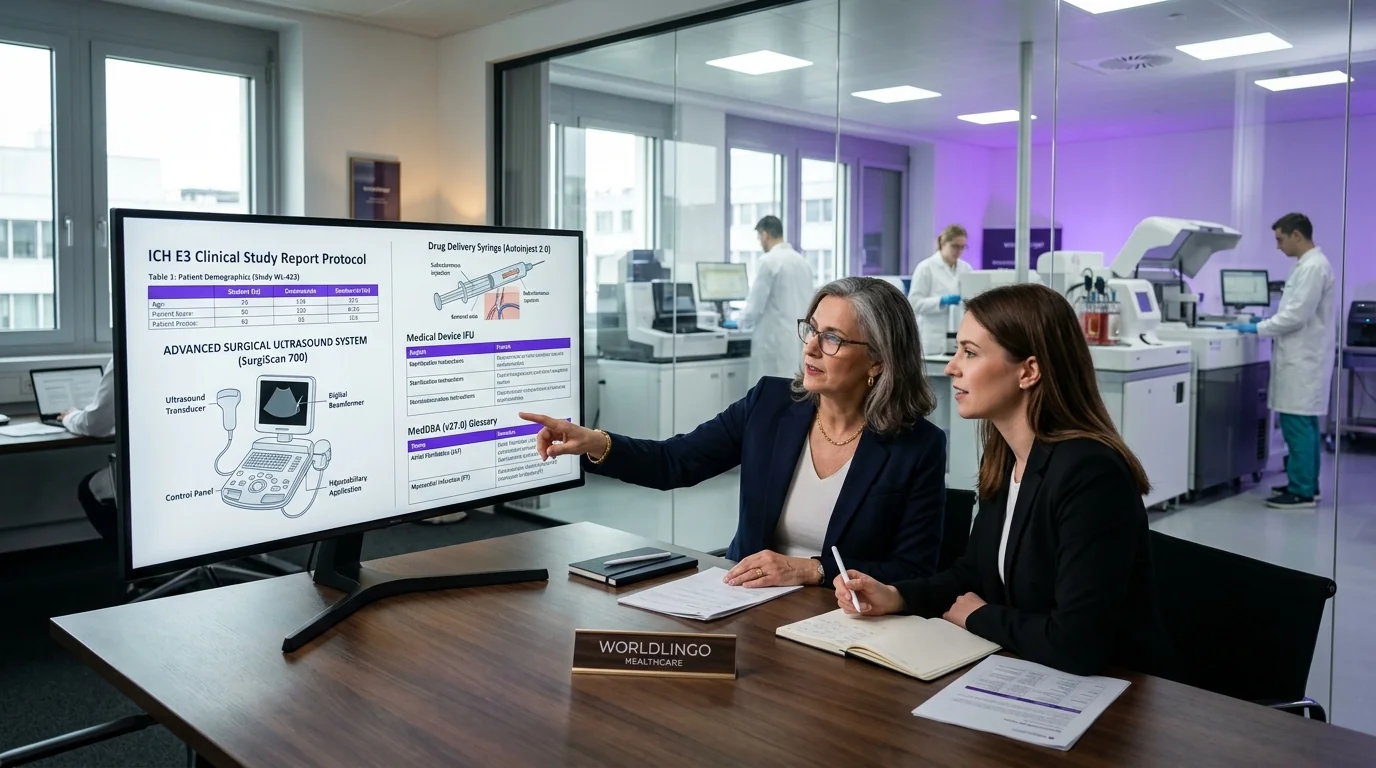
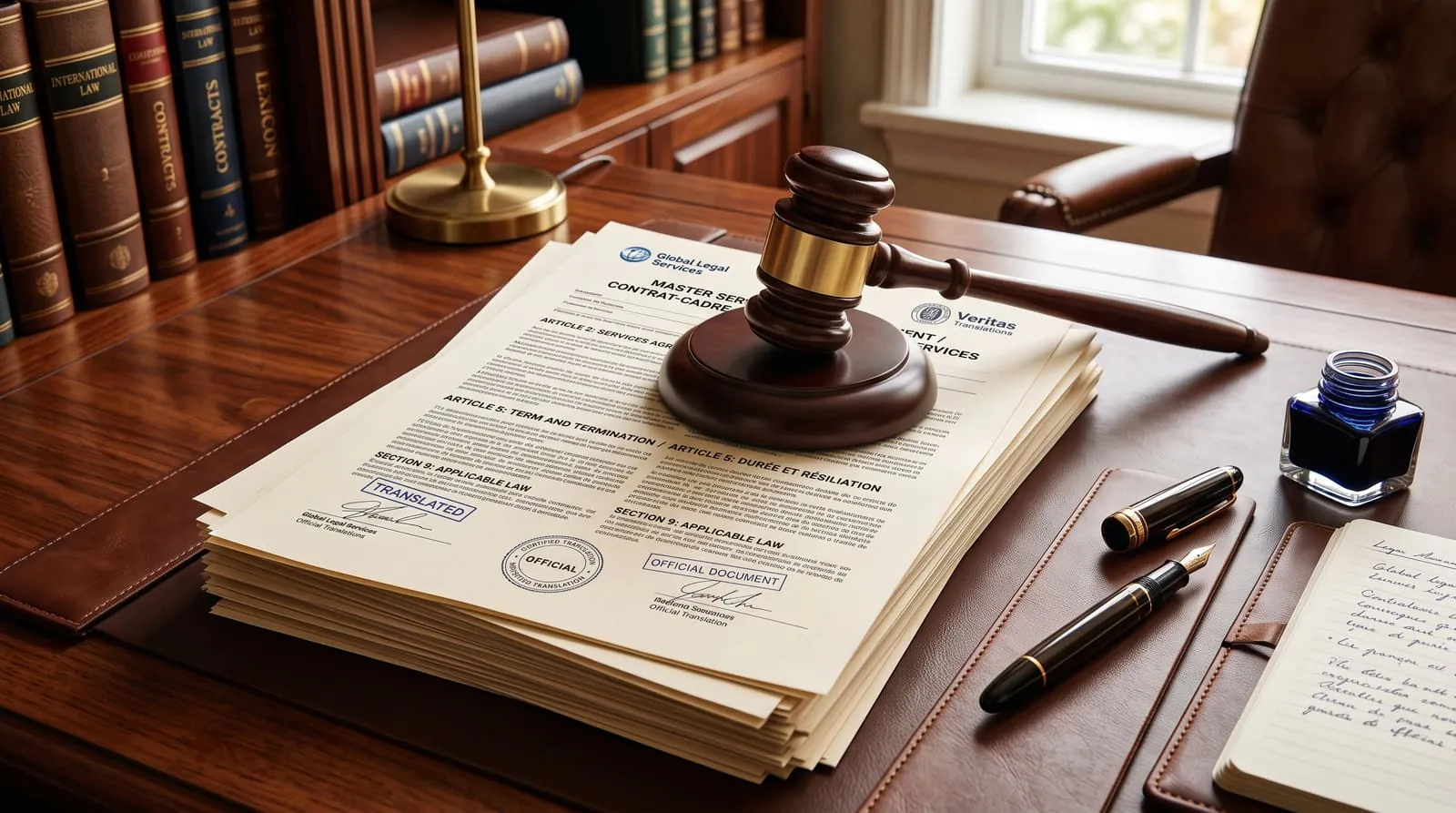
In regulated industries such as medical devices, automotive, energy, and life sciences, translation is not copy polishing—it is part of the product compliance chain. A terminology deviation in an IFU (Instructions for Use) translation can block an EU MDR 2017/745 conformity assessment. Inconsistent translations in a clinical study protocol (CTD/eCTD) can trigger regulatory queries. What enterprises truly need is professional translation services backed by quality systems, terminology governance, and traceable records—not word-count-based "language conversion."
Core Differences Between Professional and Enterprise Translation Services
1. Quality Systems, Not Individual Experience
ISO 17100:2015-compliant workflows require separation of Translation, Revision, Review, and Final Verification, with traceable records. This is the dividing line between enterprise translation services and freelance models.
2. Terminology and Corpus Asset Governance
Termbases, Translation Memories (TM), and Style Guides form enterprise language assets. Terminology inconsistency is a high-risk area for recalls and compliance issues.
3. Special Requirements for Regulated Documents
- Medical devices: EU MDR 2017/745, IVDR 2017/746, FDA 510(k) summaries, multilingual IFU versions
- Clinical trials: CTD/eCTD modules, ICF informed consent forms, CIOMS adverse event reports
- Automotive and manufacturing: ISO 26262 functional safety documents, IATF 16949 system documentation, CAN/LIN diagnostic text, IVI multilingual UI
- Legal and patents: PCT international patent applications, cross-border litigation e-Discovery, FCPA compliance materials
Multilingual Translation Services Delivery Checklist
- Requirements assessment and language confirmation (including target market regulatory requirements)
- Termbase and TM matching, with terminology consistency report
- Native-speaker translation (target language as mother tongue)
- Second-translator revision
- Subject Matter Expert (SME) review
- Format and DTP restoration (including DITA XML, SCORM courseware structures)
- Final verification and delivery record archiving
Human Translation Services vs. MTPE Comparison
| Dimension | Human Translation Services | MTPE (Machine Translation Post-Editing) |
|---|---|---|
| Use cases | Regulatory submissions, IFU, patents, clinical | Internal communication, high-volume non-critical content |
| Terminology consistency | High, enforceable termbase | Medium, depends on post-editing quality |
| Traceability | Complete process records | Requires additional review records |
| Compliance risk | Low | Medium-high, requires assessment |
核心专业术语双语对照表 (Key Terminology Cross-Reference)
| English | Chinese | Definition |
|---|---|---|
| ISO 17100:2015 | ISO 17100:2015翻译服务质量标准 | Specifies process, resource, and quality management requirements for translation service providers |
| Termbase | 术语库 | A database storing approved terms and their equivalents |
| Translation Memory (TM) | 翻译记忆库 | A system storing translated segments for reuse and consistency |
| IFU (Instructions for Use) | 使用说明书 | Safety and usage documentation accompanying medical devices |
| EU MDR 2017/745 | 欧盟医疗器械法规 | Core EU regulation for medical device market access and compliance |
| eCTD | 电子通用技术文档 | Electronic standard format for pharmaceutical regulatory submissions |
| MTPE | 机器翻译后编辑 | Human editing and proofreading of machine translation output |
| DTP | 桌面排版 | Desktop publishing and multilingual layout restoration |
Frequently Asked Questions (FAQ)
Q1: We already have internal bilingual staff. Why do we need enterprise translation services?
Internal bilingual ability is not the same as compliant delivery capability. Regulated documents require process separation, terminology governance, and traceable records. If a regulatory inquiry occurs, the absence of ISO 17100-style process records makes it difficult to demonstrate compliance. Professional translation services provide auditable language quality.
Q2: Can machine translation be used for medical device IFUs?
It is not recommended for standalone use. IFUs contain safety information, and terminology or warning errors can create compliance risk. A viable approach is MTPE with native-speaker review, maintaining termbases and review records, with final confirmation by a reviewer with regulatory knowledge.
Q3: How do multilingual translation services ensure long-term terminology consistency?
By establishing enterprise termbases and TMs, and performing terminology matching and updates at each project kickoff. Terminology changes should be version-controlled to ensure consistency between historical and new product documents.
Strategic Takeaways
When selecting a translation services provider, prioritize quality systems, terminology governance, and regulated-industry experience over unit price alone. Language assets are a long-term investment—the earlier they are governed, the lower the marginal cost.
To assess your multilingual compliance needs, contact the Linguist team for a project quote and workflow recommendations.
Expanding globally or tackling translation compliance?
ISO 17100 certified. Get instant localization readiness diagnostic & quotation.
Share this article