Software Localization Quality Assurance (LQA) & Visual Bug Auditing
Executed on live binary builds across physical machines and test environments by in-market QA linguists.
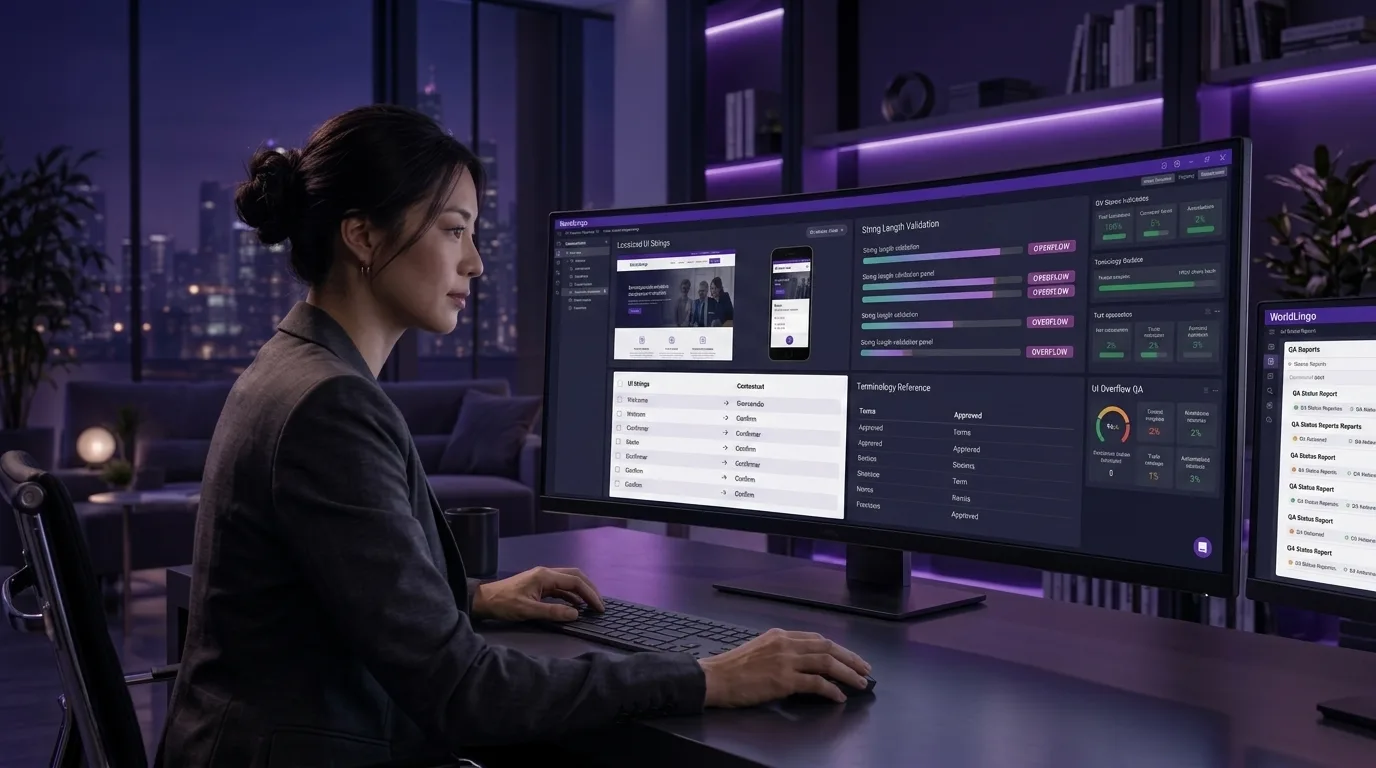
Software LQA: Bridging the Divide Between Code and UI to Guarantee Uncompromised Global Product Quality
In modern software development, regardless of how meticulously internationalization (i18n) frameworks are designed or how carefully strings are translated, unpredicted visual and interactive defects inevitably emerge once resources are compiled into binaries and executed in native environments: German compound nouns break action buttons into unreadable word fragments; developer-hardcoded strings inadvertently surface in production dialogs; and reversed Arabic layouts cause menu trees to collapse.
Shanghai Linguist's Software Localization Testing Lab brings together experienced software QA engineers and in-market native linguists. Testing directly within physical Windows, macOS, Linux, iOS, and Android testbeds, we execute methodical test passes covering primary journeys and edge cases. We not only identify linguistic and cosmetic defects, but supply precise string remediation and CSS layout adjustments directly to your developers, ensuring you never ship a flawed international build.
- ✓ Experienced software QA engineers collaborating with native linguists for full-stack defect coverage
- ✓ Extensive real-hardware testbed across Windows, macOS, Linux, and mobile OS environments
- ✓ Systematic elimination of text truncation, character corruption (Mojibake), text overlap, and hardcoded strings
- ✓ Direct integration with Jira, Bugzilla, and Linear, delivering actionable bug tickets with annotated screenshots

Exhaustive In-App Walkthroughs: Eliminating Truncation, Overlap, and Mojibake
We audit every layer of your application hierarchy. From initial splash screens to deep configuration dialogs, all core workflows and boundary conditions are tested in live runtime environments.
- Systematic Truncation Audits: Examining menus, toolbars, status indicators, and buttons to provide concise native abbreviation alternatives
- Text Overlap & Dynamic Scaling: Validating responsive adaptability under various OS display scaling settings (125%, 150%, 200% DPI)
- Character Encoding Integrity (Mojibake): Verifying non-English operating systems (Japanese Windows, Russian Linux) render fonts without corrupted glyphs
- Dynamic Placeholder Validation: Verifying that sentences containing `{0}` and `%s` render naturally when populated with live database values

Functional Testing & Hardcoded String Detection
Many critical defects hide within strings hardcoded directly in application source code. We trigger edge-case exceptions to flush out unlocalized strings.
- Unextracted Hardcoded String Detection: Identifying unlocalized source language strings lingering in rare error dialogs, tooltips, and log outputs
- Dynamic In-App Language Switching: Verifying live language toggling without application restart to check for memory leaks or cached strings
- Keyboard Shortcut & Accelerator Conflicts: Checking that mnemonic access keys (e.g., `&File`) remain unique across translated menus
- Collation & Alphabetical Sorting: Confirming that search filtering and list sorting follow target locale conventions (e.g., German umlauts)

Standardized Jira Defect Logging & Agile Engineering Handoff
Developers need clear, reproducible bug tickets. Every issue we document follows strict international software engineering reporting standards.
- Four-Part Reproducibility Standard: Providing exact Prerequisites, Step-by-Step Actions, Observed Result, and Expected Native Behavior
- High-Resolution Visual Annotations: Supplying full-screen captures with highlighted red bounding boxes and exact suggested string fixes
- Rigorous Severity Triage: Classifying defects into Blocker, Critical, Major, and Minor tiers to assist release managers in sprint prioritization
- Full Regression Testing Passes: Performing complete re-verification runs on developer fix builds before issuing an official LQA Quality Sign-Off
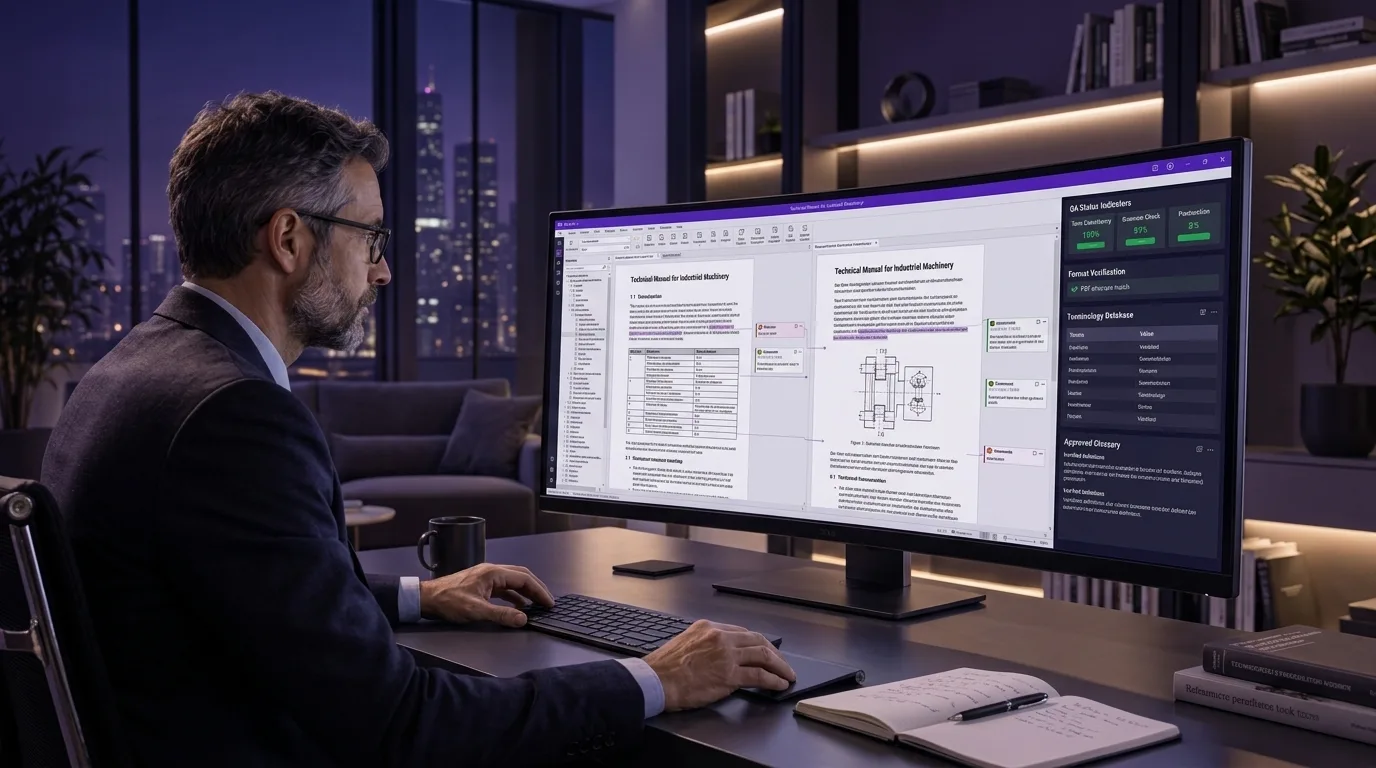
Enterprise Delivery Standards & Deliverables
Every specialized service includes full format fidelity, language asset retention, and end-to-end quality traceability.
Final Work Products
Full layout and visual hierarchy preservation across all file formats
- ✓ Format-Preserved Translations (Office/PDF/InDesign)
- ✓ Bilingual Side-by-Side Review Files
- ✓ Production-Ready Deployment Packages
Language Assets Package
Deliverables include durable digital assets for enterprise scale
- ✓ Enterprise TermBases (TB / Glossary)
- ✓ Standard Translation Memories (TMX / XLIFF)
- ✓ Do-Not-Translate & Brand Tone Guidelines
Quality & Compliance Proof
Meeting international regulatory and legal audit standards
- ✓ ISO 17100 Traceability Card & Sign-Off Report
- ✓ Official Certified Translation Certificate / Seal
- ✓ Strict Confidentiality Undertaking & NDA Compliance
SLA & Post-Delivery Support
Ongoing warranty to guarantee seamless business launch
- ✓ 30-90 Days Post-Delivery Revision Warranty
- ✓ Pre-Launch Testing Coordination & Fixes
- ✓ Dedicated Project Manager & Lead Linguist Support
Specific Scope Deliverables
Comprehensive engineering deliverables structured for immediate developer remediation:
Software LQA Testing Cadence
From testbed setup and scenario drafting to in-app execution, Jira ticket logging, regression testing, and release sign-off.
Testbed Setup & Scenario Mapping
Configure target-locale OS testbeds and physical machines; draft LQA test scenarios covering all application views.
Native In-App Testing Execution
In-market QA linguists execute test scenarios, documenting contextual mistranslations, layout truncation, and hardcoded text.
Jira Ticket Logging & Collaboration
Log standardized bug tickets in Jira complete with reproduction steps, annotated screenshots, and exact string fixes.
Patch Regression & Release Sign-Off
Execute full regression testing on developer fix builds, certifying the release once all critical blockers are resolved.
Why Software Engineering Teams Choose Shanghai Linguist for LQA
Native Linguists Paired with Professional Software QA Engineers
Combining linguistic nuance with rigorous software testing methodology to uncover both semantic and functional defects.
Extensive Multi-Platform Physical Testbeds
Testing across native language editions of Windows, macOS, Linux, and mobile hardware, replicating real end-user environments.
Actionable String Fixes Provided Directly to Developers
We do not merely report truncation; we supply concise, approved native abbreviations that fit neatly into UI containers.
Seamless Agile Sprint Integration
Fluency with Jira, Linear, and GitLab workflows, integrating directly with your development cycles for rapid release clearance.
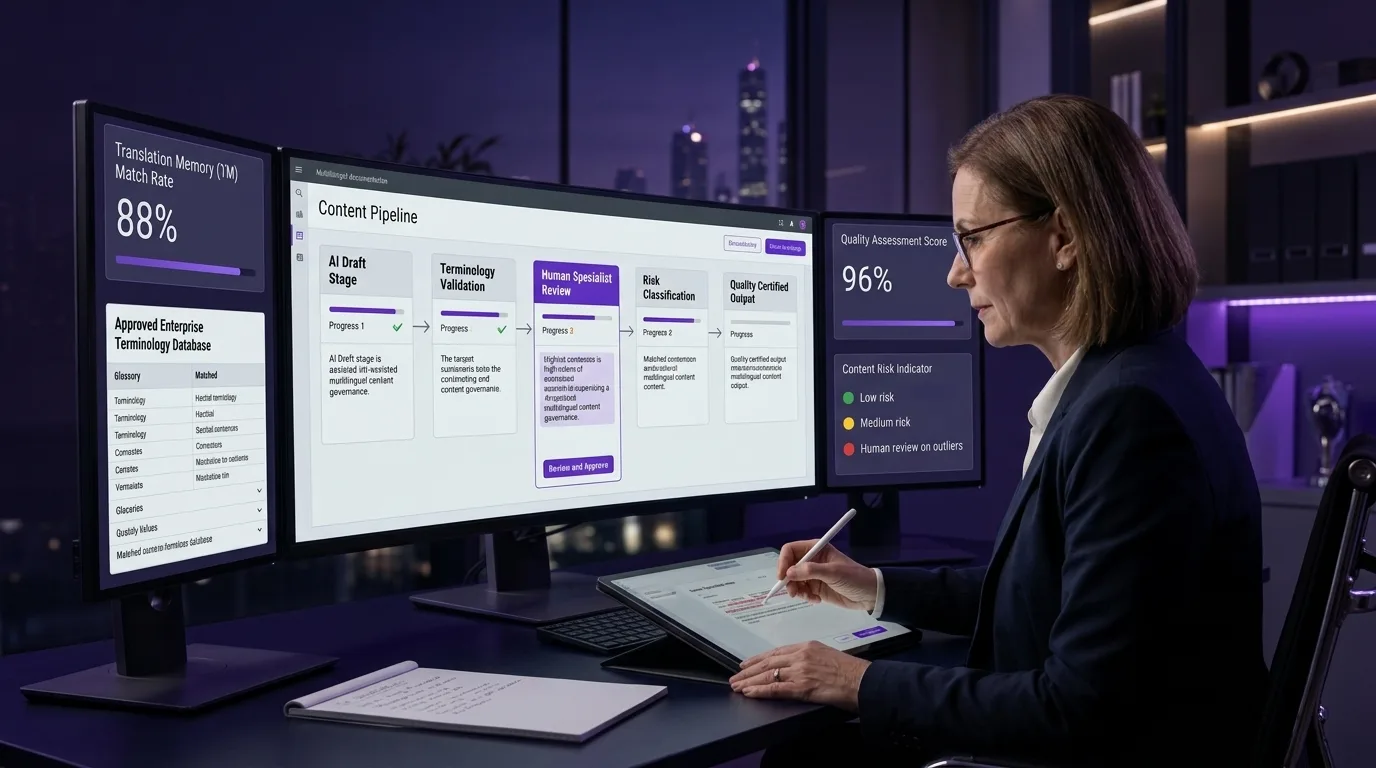
Related Software Localization Specializations
Explore adjacent specialized capabilities within the same enterprise domain.
Software UI String Localization & Character Length Constraint Management
Specialized localization for desktop and cloud web interfaces covering menus, buttons, dialogs, tooltips, and system alerts. Utilizing visual context pairing and variable isolation ({0}, %s, HTML entities), our engineers balance text expansion across languages, preventing contextual ambiguity and layout container overflow.
Mobile App UI Localization for iOS & Android Ecosystems
Designed for compact mobile viewports across smartphones and tablets. We provide turnkey localization for native iOS (.strings, .stringsdict) and Android (strings.xml) resource packages. Solving complex morphological pluralization, regional currency/date conventions, and responsive orientation switching to ensure native user experiences.
Help Center, Knowledge Base & Release Notes Software Localization
Dedicated to online customer help centers (Zendesk, Intercom, Notion), user manuals, and version update Release Notes for SaaS products and enterprise software. Bound tightly to software UI terminology databases, we ensure documentation navigation paths match real interfaces perfectly, enabling users to self-serve and cutting international support costs.
App Store & Google Play Listing Localization with International ASO
Your listing is the primary touchpoint dictating whether international users install your mobile app. Conforming strictly to Apple App Store and Google Play Store algorithms, we optimize app titles, subtitles, 100-character keyword fields, promotional descriptions, and release notes with native copywriting and data-backed ASO strategies, redesigning promotional screenshots to maximize conversion rates.
Continuous Localization & CI/CD Pipeline Automation for Agile Teams
Ending the outdated waterfall bottleneck of 'holding releases for translation'. Integrating GitHub Actions, GitLab CI/CD, and modern TMS APIs (Phrase, Lokalise, Crowdin, Transifex), newly committed strings are automatically pushed to cloud translation workflows, verified by native linguists within 2-4 hours, and merged back via automated Pull Requests for synchronized global deployments.
Frequently asked questions
Common questions on pricing, turnaround, confidentiality and file formats—contact us for anything else.
Ready to Start Your Project?
Submit your requirements and files. Our consultant will provide a transparent quote and timeline within 24 hours.
What is included in LQA Testing?
How much does LQA Testing (Software Localization) cost?
What factors affect translation pricing?
How long does translation take?
Can you handle urgent projects?
Do you sign NDAs and protect confidential files?
Ready to Start Your Project?
Submit your requirements and files. Our consultant will provide a transparent quote and timeline within 24 hours.
Preparing your software for global release and need to eliminate UI truncation and hardcoded strings?
Provide your test installer or staging environment access. Our LQA director will deliver an initial UI defect sampling audit and proposal within 2 hours.